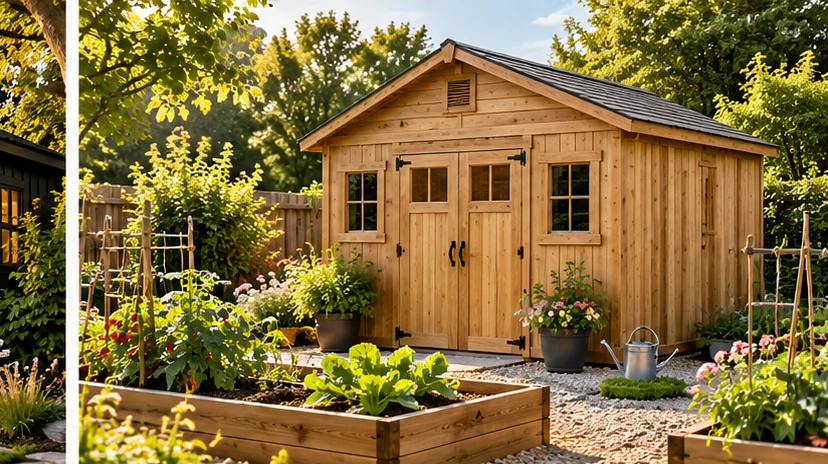
A charming pitched roof is not proof that a shed is suitable for a snowy location. Snow loading depends on local climate, roof shape, exposure, drifting, and the actual structure. Check ratings before buying.
Ask what the stated rating means
A number without documentation or units is not enough. Find the product’s published structural criteria and whether they apply to the exact model, roof configuration and site.
Know that local conditions differ
Mountain sites, sheltered corners and roofs near taller buildings may experience drifting. Local authorities or qualified designers determine relevant design loading where required.
Avoid improvised roof loading
Do not store heavy objects on roof framing or add roof-mounted equipment without design approval. Any removal of snow must follow safe practices; small shed roofs often are not intended to support a person.
Plan for drainage as snow melts
Meltwater should drain away from door openings and foundations. Observe ice accumulation near the entrance and keep access routes safe.
Snow capacity is a system property
The roof covering, supporting members, connections and walls all contribute to resistance against snow loads. A steep roof may shed some snow under certain conditions, but accumulation and drift patterns vary. A manufacturer’s stated limit needs to be interpreted in the context of the actual product, assembly, location and local requirements. A roof option added after purchase can change these conditions.
Beware the area around larger buildings
A small shed beside a taller structure may receive drifting snow, and roof valleys or obstructions can affect accumulation. If the site is subject to heavy snow, discuss placement and structural criteria before purchasing. Do not rely on a general “four-season” marketing phrase to establish local suitability. An installer should be able to point to the model's specific documentation rather than a generic shed brochure.
Post-storm habits reduce exposure
Keep the path to the shed usable without standing under hazardous edges. Check from the ground for roof distortion, water entry and door changes. Do not walk on a lightweight roof to remove snow; consult qualified help and the manufacturer's guidance. Inspect the drainage route as temperatures rise, because repeated thaw can direct water toward the foundation.
Buyer / homeowner checklist
- Request roof loading documentation
- Check local snow requirements
- Avoid stepping on unsupported shed roofs
- Inspect safely after storms
Put it into practice: a planning example
Imagine a shed tucked below a taller garage, where wind may deposit snow unevenly. A roof that looks steep and sturdy may still experience unusual drift loads. Compare the actual roof model and structural documentation with local requirements rather than guessing from appearance. Leave the roof untouched during a storm and arrange qualified help if damage or unsafe accumulation develops. Also plan where thawing snow will run, since a winter roof problem can become a spring foundation problem.
Questions to bring to a seller or installer
A useful comparison begins with current written specifications for exact model numbers. Put all contenders in one worksheet and do not replace missing specifications with guesses. A good answer identifies the product, base, and included services, rather than offering a generic sales assurance.
- What structural documentation applies to the model?
- What does the local authority require at this address?
- How does the roof or wall connect through to the foundation?
- What inspection is prudent after severe weather?
For every answer, note the model number, the source of the specification, the date you obtained it, and whether it was confirmed in a current installation manual or supplier quote. This makes the comparison more useful if prices or terms change before you purchase.
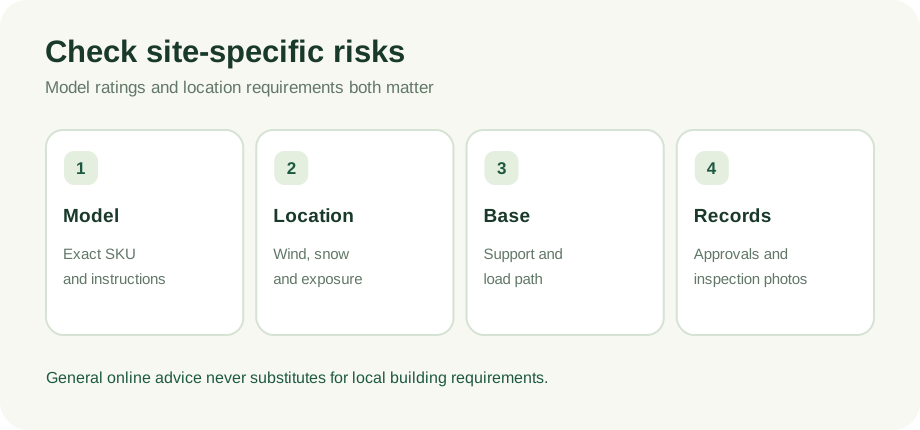
Frequently asked questions
Can I tell snow capacity from roof pitch alone?
No. Pitch is only one factor; framing, spans, connections and site conditions are also important.
Next step: compare complete specifications
Before committing, place at least two suitable models side by side. Note interior dimensions, actual doorway, floor construction, permitted foundation, anchoring, delivery terms, and warranty exclusions. Where specifications or prices are missing, contact the seller for the current written information. If work involves structural changes, power, or local approvals, consult the appropriate qualified professional.
We have not hands-on tested products or inspected customer installations for this article. Product specifications and applicable building rules must be checked with current manufacturers and local authorities. Retailer links elsewhere on this site are direct links until affiliate approvals are confirmed.
Read our editorial policy ↗