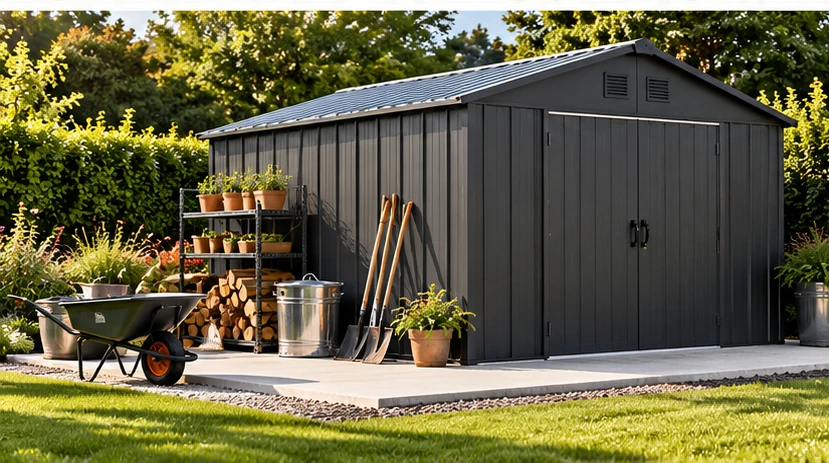
If droplets collect beneath a metal shed roof on a cool morning, the roof may not be leaking at all. Warm, moist air can meet a colder metal surface and condense. The fix begins with diagnosing where the water comes from, not sealing every vent you can find.
Tell condensation from rain entry
Observe when the dampness appears. Water after a storm at a specific fastener, flashing joint, or seam suggests rain entry. A broad pattern of droplets underneath the roof during cool, humid weather suggests condensation. Both can happen together. Photograph the pattern, record the weather, and inspect safely from the ground. Do not climb an unsupported lightweight shed roof to investigate.
Start with the ground and drainage
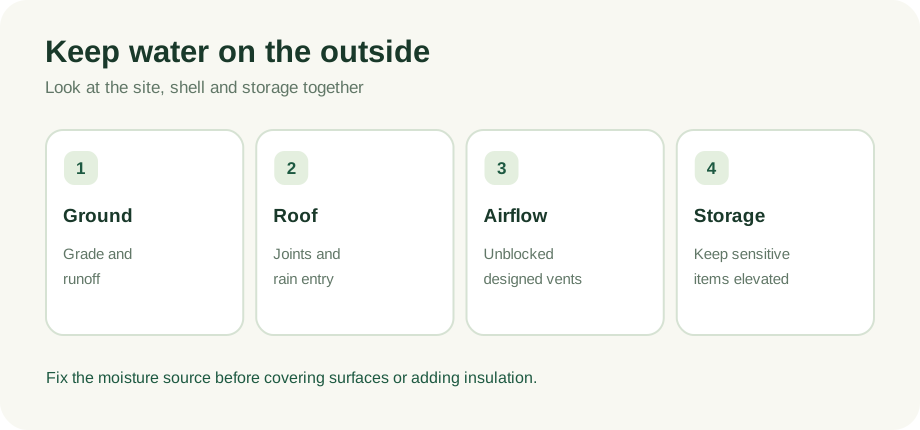
A constantly damp floor can keep interior humidity elevated. The site should drain away from the shed rather than toward it, and the base should follow the product’s approved installation details. Avoid letting shrubs or soil touch wall panels. Keep wet tools and lawn equipment from being stored while dripping. If you see persistent standing water underneath the shed, solve that first instead of adding gadgets inside.
Preserve the designed airflow
Ventilation helps move moisture-laden air, but openings must be appropriate to the specific shed. Do not cut new holes through load-bearing parts or manufacturer panels without instructions; doing so can create leaks or void coverage. Keep existing intake and exhaust vents unblocked by shelves or stacked cartons. During seasonal changes, examine whether stored materials obstruct the designed airflow path.
Understand insulation and anti-condensation options
Some roof systems use factory-applied anti-condensation treatments or approved insulation details. Their performance and compatibility vary. Improvised foam or membranes can trap moisture between layers, interfere with panel movement, or create a fire concern. If modifications are needed, ask the manufacturer what is permitted. In an existing shed, a small humidity monitor can help reveal patterns, but a number on a screen is not a cure.
Store for a drier outcome
Use shelves to keep cardboard and fabrics off the floor and away from exterior walls. Leave a narrow inspection gap around the perimeter. Dry equipment before storing it when feasible. Keep fuels, fertilizers, and chemicals according to their safety labels rather than treating a shed as a universal storage space. Re-check after heavy rain and cold nights to determine whether the changes help.
A simple observation log
For two weeks during the most relevant weather, make brief notes about outside temperature trend, recent rain, visible dampness and where water appears. Broad roof condensation on cool mornings suggests a different problem from a single dripping seam in every storm. Add a quick photo whenever the pattern changes. A record can help the manufacturer or installer distinguish a design issue from a damaged panel or site drainage problem.
When discussing changes, ask about ventilation that is compatible with the exact roof and wall system. Never cover active leaks with insulation or assume adding a fan is the first solution. The site and the shell should work before you introduce more equipment.
Buyer / homeowner checklist
- Observe droplets by weather and location before diagnosing.
- Check the base for pooling water and wet soil.
- Keep purpose-built vents clear.
- Confirm manufacturer permission before modifying roof panels.
- Protect cardboard and soft goods from prolonged contact with walls.
Questions to bring to a seller or installer
A useful comparison begins with current written specifications for exact model numbers. Put all contenders in one worksheet and do not replace missing specifications with guesses. A good answer identifies the product, base, and included services, rather than offering a generic sales assurance.
- What is included in the base product?
- Which delivery and installation services are excluded?
- What documentation supports the claims?
- What is the full project cost and ongoing responsibility?
For every answer, note the model number, the source of the specification, the date you obtained it, and whether it was confirmed in a current installation manual or supplier quote. This makes the comparison more useful if prices or terms change before you purchase.
Frequently asked questions
Will a dehumidifier solve a metal shed moisture problem?
Only in some enclosed, powered spaces. It may be ineffective in a leaky unconditioned shed, and it does not fix drainage or roof leaks.
Does a wet roof underside always mean the roof failed?
No. Broad, weather-dependent droplets can be condensation. Localized water during rain may indicate a leak; both warrant inspection.
Next step: compare complete specifications
Before committing, place at least two suitable models side by side. Note interior dimensions, actual doorway, floor construction, permitted foundation, anchoring, delivery terms, and warranty exclusions. Where specifications or prices are missing, contact the seller for the current written information. If work involves structural changes, power, or local approvals, consult the appropriate qualified professional.
We have not hands-on tested products or inspected customer installations for this article. Product specifications and applicable building rules must be checked with current manufacturers and local authorities. Retailer links elsewhere on this site are direct links until affiliate approvals are confirmed.
Read our editorial policy ↗