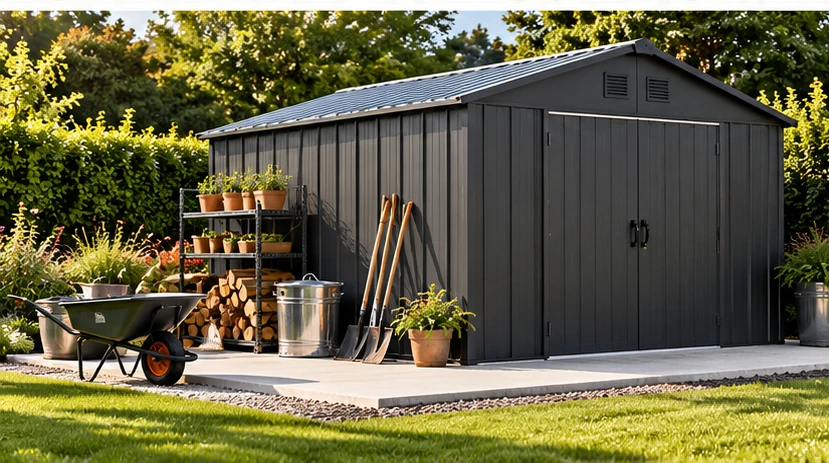
No padlock can turn a flimsy door into a vault. Good shed security is a system: sensible location, suitable construction, good hardware, and habits that reduce easy opportunities for theft.
Look at the complete door assembly
Check hinges, hasp mounting, frame rigidity, alignment and whether hardware is easily removed from outside. Heavy locks need sufficiently strong attachment points.
Review sightlines and lighting
A shed hidden from every view may give a burglar more privacy. Exterior lighting can help when appropriate, but follow local rules and avoid disturbing neighbors.
Secure valuable equipment appropriately
Keep records or serial numbers for high-value tools and bicycles. Consider a suitably designed independent anchor where appropriate rather than trusting thin panels.
Avoid false guarantees
Evaluate home insurance coverage and exclusions. No consumer shed or accessory makes burglary impossible, so focus on reasonable deterrence and secure storage habits.
A physical lock needs a sound attachment
A weather-resistant lock is useful only if the door, frame and hasp resist ordinary tampering. Thin panel material or exposed removable fasteners can create weaknesses independent of lock quality. Examine the actual door assembly and ask about manufacturer-approved reinforcement. Avoid weakening walls by drilling new holes without approval. A properly aligned door that closes consistently is part of security, not just convenience.
Protect what matters in other ways
Record serial numbers and ownership details for expensive tools. Do not advertise valuable contents through open doors, and consider reasonable exterior lighting and sightlines where appropriate. Review insurance terms rather than assuming anything stored in an outbuilding is fully covered. Any internal lock-down points need to be attached to appropriate structure, not just decorative cladding.
Distinguish deterrence from guarantees
Locks, alarms and cameras may discourage some theft, but none makes a building impossible to enter. Choose a system proportionate to what is stored and the property context. Keep access safe for household members and emergency responders. Routine habits—closing doors correctly, keeping hinges maintained, and not leaving keys nearby—remain important.
Buyer / homeowner checklist
- Inspect hasp and hinge mounting
- Keep door closure correctly aligned
- Document high-value equipment
- Review insurance conditions
Put it into practice: a planning example
A homeowner adds an expensive lock to a metal shed door while the hasp is attached through thin, accessible hardware. The lock price alone does not address the weak point. Inspect how hinges, hasp, frame and door align, and ask about manufacturer-approved reinforcement. Keep valuable tools recorded and review insurance coverage. A visible location and practical lighting can help, but do not assume any one measure makes a shed theft-proof.
Questions to bring to a seller or installer
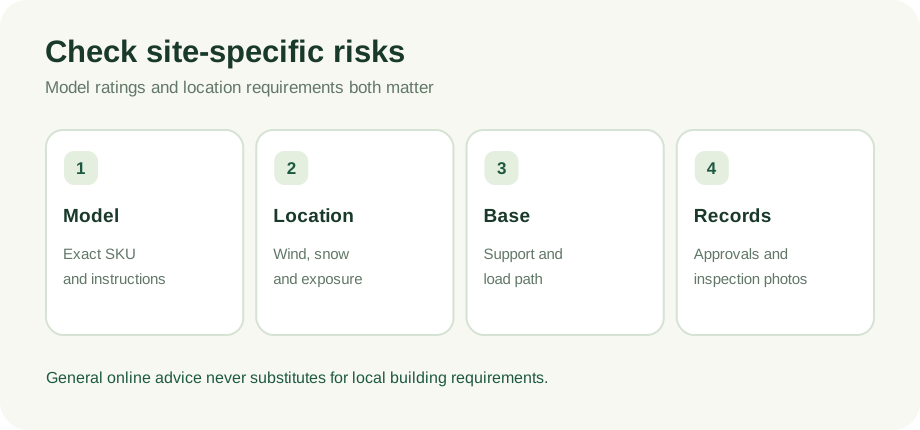
A useful comparison begins with current written specifications for exact model numbers. Put all contenders in one worksheet and do not replace missing specifications with guesses. A good answer identifies the product, base, and included services, rather than offering a generic sales assurance.
- What structural documentation applies to the model?
- What does the local authority require at this address?
- How does the roof or wall connect through to the foundation?
- What inspection is prudent after severe weather?
For every answer, note the model number, the source of the specification, the date you obtained it, and whether it was confirmed in a current installation manual or supplier quote. This makes the comparison more useful if prices or terms change before you purchase.
Frequently asked questions
Does an expensive padlock guarantee security?
No. A lock is only one component; a weak door or hasp can defeat it.
Next step: compare complete specifications
Before committing, place at least two suitable models side by side. Note interior dimensions, actual doorway, floor construction, permitted foundation, anchoring, delivery terms, and warranty exclusions. Where specifications or prices are missing, contact the seller for the current written information. If work involves structural changes, power, or local approvals, consult the appropriate qualified professional.
We have not hands-on tested products or inspected customer installations for this article. Product specifications and applicable building rules must be checked with current manufacturers and local authorities. Retailer links elsewhere on this site are direct links until affiliate approvals are confirmed.
Read our editorial policy ↗