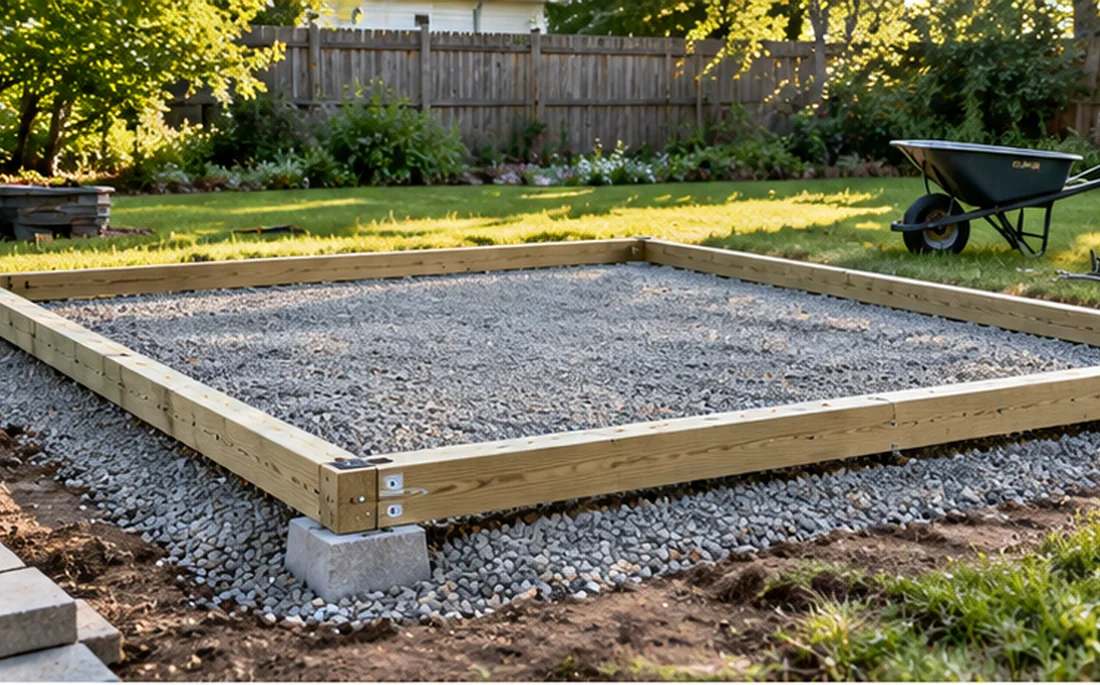
A small shed roof can still concentrate water along a short edge. If runoff lands next to the foundation, persistent dampness and erosion can undercut an otherwise sound installation.
Observe water before adding hardware
During a safe rain observation, note where the roof discharges and which direction surface water flows. Do not assume every wet wall is caused by a roof defect.
Check whether gutters are approved
Some shed roofs accept compatible gutter accessories; others lack a suitable fascia or mounting system. Verify attachment guidance and snow or debris considerations.
Give discharged water a destination
A downspout only moves the issue if it dumps onto the pad edge. Use a drainage approach suitable for the property, soil and local rules.
Maintain the perimeter
Keep plants and piled mulch away from vulnerable wall bottoms. Inspect erosion after major storms and correct low spots before they cause movement.
Follow the runoff path
Water can travel from roof to ground to foundation to shed interior. Fixing only the first part may move the problem a few feet rather than solving it. Stand in a safe place during rain and observe the direction of flow. Look for ground slope, soil erosion, puddles near the doorway and downspouts from adjacent buildings. A shed placed beneath a house roof edge can receive additional runoff not captured in its own roof area.
Think about attachment and winter conditions
Some sheds have compatible gutter kits, while others lack framing designed to carry gutter fasteners. A gutter attached to thin cladding can fail or damage panels. Review the actual product instructions and, in freezing climates, consider snow and ice effects with a qualified installer. Never assume hardware intended for a house fascia is suitable for a lightweight resin shed.
Recheck after making changes
Once runoff is redirected, monitor the pad edges after the next safe heavy rain. Check whether water now pools near a path, fence or neighboring parcel. Keep clear of public drainage systems or underground utilities without authorization. Seasonal maintenance matters because leaves and debris can make a functioning system fail months later.
Buyer / homeowner checklist
- Trace roof runoff in rain
- Confirm approved gutter attachment
- Direct drainage away from the base
- Inspect pad edges after storms
Put it into practice: a planning example
A shed sits close to a fence where rain repeatedly splashes onto its lower panels. A gutter could reduce roof runoff at the wall, but simply dropping the water beside the pad is not a solution. Trace an appropriate discharge path away from vulnerable areas, considering local rules and neighbors. Check whether the shed supports a compatible gutter or fascia attachment. After installation, monitor the next safe rainfall and look for any new erosion or pooling.
Questions to bring to a seller or installer
A useful comparison begins with current written specifications for exact model numbers. Put all contenders in one worksheet and do not replace missing specifications with guesses. A good answer identifies the product, base, and included services, rather than offering a generic sales assurance.
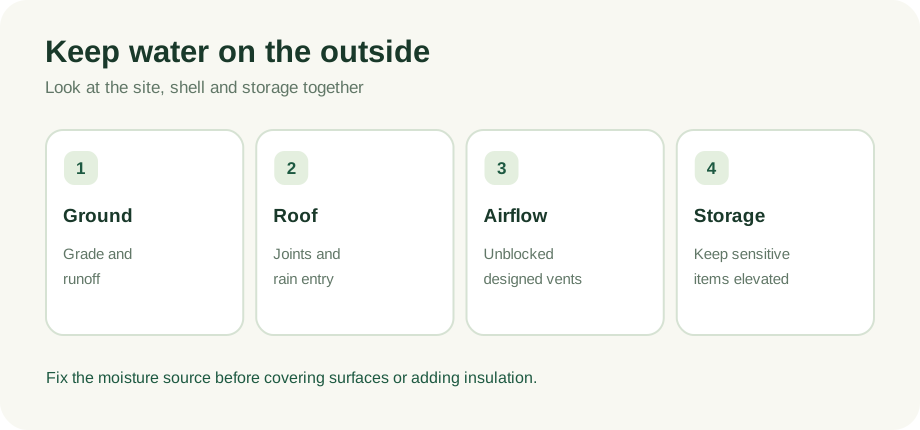
- What is the source of moisture or wear?
- Can water leave the building and its base?
- Which openings are deliberate vents?
- What maintenance is required by the manufacturer?
For every answer, note the model number, the source of the specification, the date you obtained it, and whether it was confirmed in a current installation manual or supplier quote. This makes the comparison more useful if prices or terms change before you purchase.
Frequently asked questions
Will gutters fix a leaking shed?
Not necessarily. They help manage roof runoff, but leaking seams or inappropriate ventilation need separate diagnosis.
Next step: compare complete specifications
Before committing, place at least two suitable models side by side. Note interior dimensions, actual doorway, floor construction, permitted foundation, anchoring, delivery terms, and warranty exclusions. Where specifications or prices are missing, contact the seller for the current written information. If work involves structural changes, power, or local approvals, consult the appropriate qualified professional.
We have not hands-on tested products or inspected customer installations for this article. Product specifications and applicable building rules must be checked with current manufacturers and local authorities. Retailer links elsewhere on this site are direct links until affiliate approvals are confirmed.
Read our editorial policy ↗