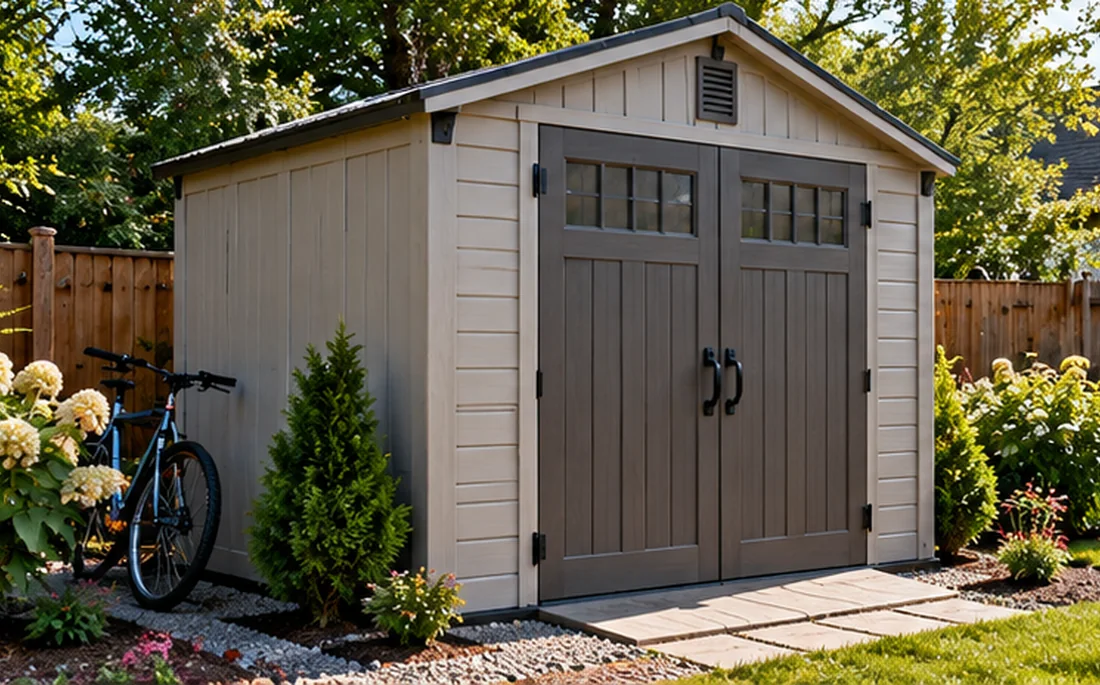
Winter preparation is mostly a sequence of small tasks: keep water out, maintain access, store equipment properly, and inspect visible roof and door conditions before severe weather arrives.
Inspect exterior drainage
Clear debris from appropriate drainage paths and make sure ground runoff is not being directed beneath the shed. Photograph questionable areas before a storm.
Protect equipment according to its manual
Battery, mower, pressure washer and engine-storage instructions vary. Follow the equipment maker for fluids, charging, stabilizers, or draining rather than applying one rule to everything.
Keep ventilation and access clear
Avoid stuffing bins against built-in vents. Test hinges and latches, and make sure the door can open without striking seasonal obstacles.
Plan post-storm inspections
From the ground, look for displaced panels, water entry or damage. Do not climb a shed roof or enter a structure with obvious instability.
Divide the shed into weather-sensitive groups
Hand tools, electronics, fabric cushions, seed products and engine equipment do not belong under one generic winter rule. Label the things that can tolerate freezing, the things that must stay dry, and the things that should be stored elsewhere according to their own instructions. Moisture-sensitive cardboard and soft goods should not sit in contact with a potentially damp floor or outside wall. Keeping a simple inventory saves repeated opening and rearranging during storms.
Inspect the envelope before cold weather
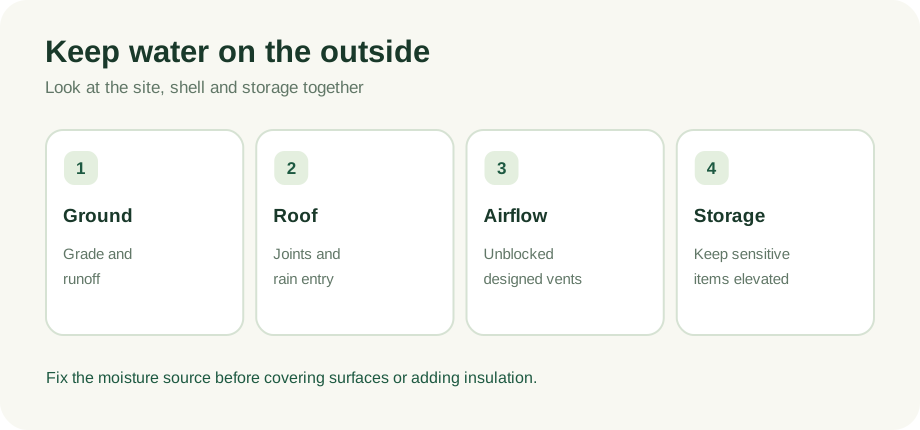
Look at door seals, hardware, roof seams from the ground, base drainage and any built-in vents. Keep foliage away from the structure. Photograph existing wear so you can identify what changed after winter. If the shed has a gutter system, follow a safe cleaning approach and check where the water discharges. Even a small pool beside the threshold can become a persistent entry problem.
Avoid tempting shortcuts
A portable open-flame heater, makeshift extension cord or unvented fuel-burning appliance can create serious risks. If year-round workshop conditions are needed, plan the building and its systems for that use rather than relying on improvised heat. For machines, use the actual equipment storage instructions; batteries and fluids differ significantly across products.
Buyer / homeowner checklist
- Inspect and clear safe-to-reach drainage
- Follow equipment winter-storage instructions
- Keep doors and vents clear
- Store a photo record of pre-winter condition
Put it into practice: a planning example
Choose three things in the shed most vulnerable to winter: perhaps a small engine, a pressure washer and cardboard boxes on the floor. Each needs a different action. The engine follows its maker's storage instructions, water-containing tools may need approved draining or protection, and paper goods need a dry elevated location. Use a simple photo checklist in autumn, then compare conditions after the first major storm. This is more reliable than putting everything into the shed and shutting the door until spring.
Questions to bring to a seller or installer
A useful comparison begins with current written specifications for exact model numbers. Put all contenders in one worksheet and do not replace missing specifications with guesses. A good answer identifies the product, base, and included services, rather than offering a generic sales assurance.
- What is the source of moisture or wear?
- Can water leave the building and its base?
- Which openings are deliberate vents?
- What maintenance is required by the manufacturer?
For every answer, note the model number, the source of the specification, the date you obtained it, and whether it was confirmed in a current installation manual or supplier quote. This makes the comparison more useful if prices or terms change before you purchase.
Frequently asked questions
Should I heat an uninsulated shed in winter?
Do not use improvised heating. Permanent climate control requires appropriate building, electrical, and fire-safety planning.
Next step: compare complete specifications
Before committing, place at least two suitable models side by side. Note interior dimensions, actual doorway, floor construction, permitted foundation, anchoring, delivery terms, and warranty exclusions. Where specifications or prices are missing, contact the seller for the current written information. If work involves structural changes, power, or local approvals, consult the appropriate qualified professional.
We have not hands-on tested products or inspected customer installations for this article. Product specifications and applicable building rules must be checked with current manufacturers and local authorities. Retailer links elsewhere on this site are direct links until affiliate approvals are confirmed.
Read our editorial policy ↗