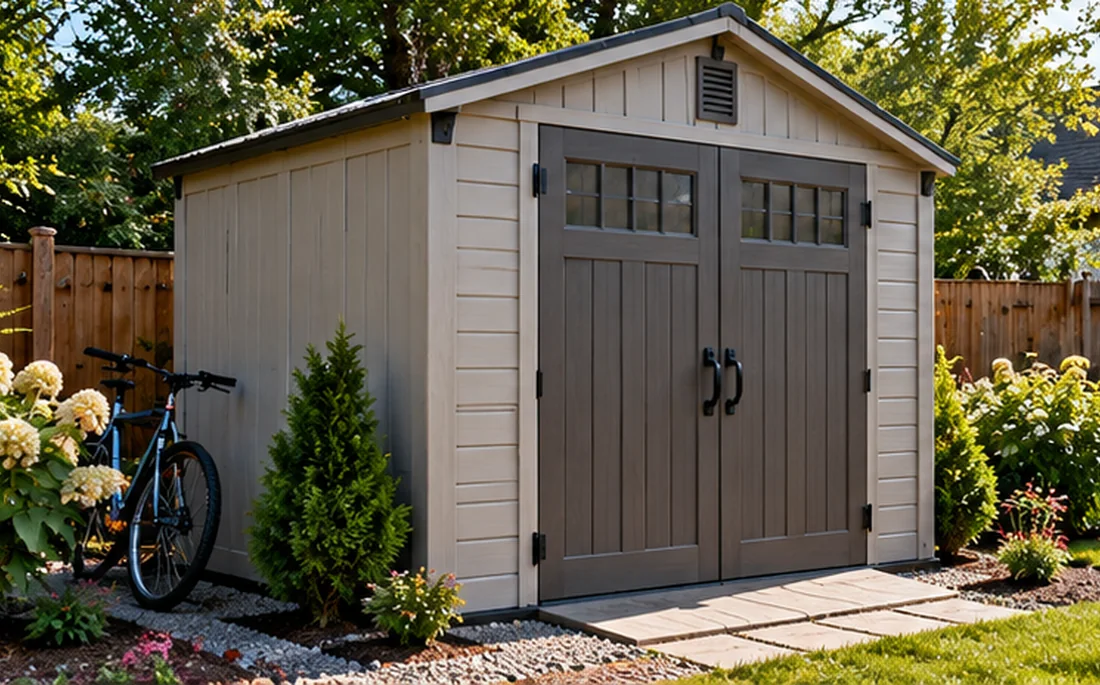
A storage shed and a rental unit solve overlapping but different problems. The shed offers immediate access if your property and rules allow it; a rented unit may provide flexibility and off-site space without construction.
Start with what you are storing
Hazardous materials, temperature-sensitive belongings and valuable items may be unsuitable for an ordinary backyard shed. Review the provider’s storage rules and your shed’s conditions.
Calculate cash flows separately
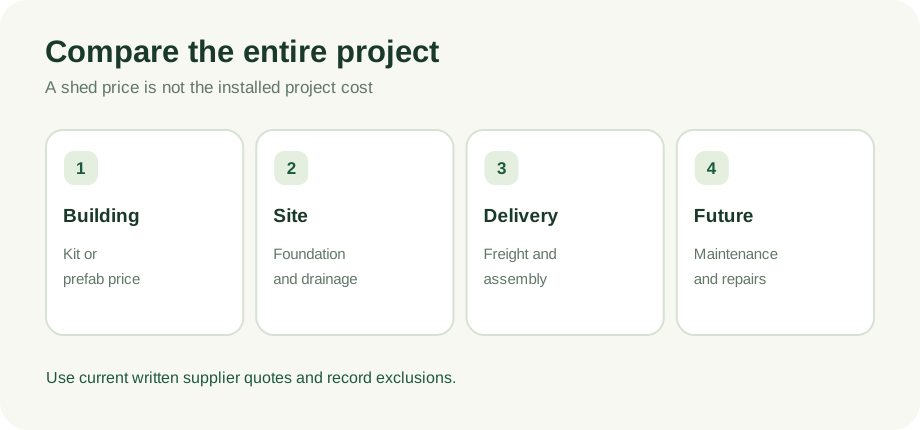
A shed incurs the building, foundation, delivery, site prep and maintenance upfront or over time. A storage unit charges recurring rent, potentially insurance, access fees and rate changes.
Value access realistically
Walking into your backyard may save repeated trips, but a storage unit can offer larger footprints or managed premises. Determine how often you need an item and how you transport it.
Account for flexibility and local rules
A storage unit can be canceled under its contract; a shed may remain with the property and be subject to HOA, zoning or lease limitations. Do not assume a shed increases property value by a specific amount.
Build two honest cost timelines
For a shed, note the initial building, foundation, site preparation, delivery, installation, permits and expected maintenance. For a rented storage unit, note rent, likely rate changes, insurance or required coverage, transport and access time. Use actual quotes rather than an invented average monthly storage price. Compare a three-year and five-year horizon to see how the upfront cost changes the decision. Do not assume either choice has a guaranteed resale benefit.
Match the environment to the belongings
An ordinary unconditioned garden shed may be unsuitable for papers, electronics, fabrics or valuables exposed to heat, humidity or pests. A rented unit is not necessarily climate-controlled either; check the exact contract. Also compare security features, allowed materials, access hours and what happens if the service or structure is temporarily unavailable.
Consider non-financial constraints
If the user rents their home, their lease may prohibit a permanent shed. On owned property, zoning, HOA rules or setbacks may limit placement. A unit can be changed or canceled under contract; a shed requires a physical site, installation work and long-term maintenance. Convenience can favor backyard storage, but not when it creates a compliance problem or threatens sensitive goods.
Buyer / homeowner checklist
- List storage restrictions for each option
- Build a five-year cost worksheet
- Compare access frequency and travel
- Check property and zoning limitations
Put it into practice: a planning example
Consider a homeowner who pays monthly for space occupied mostly by gardening tools and seasonal furniture. A backyard shed may cut travel time but adds upfront construction and future upkeep, while a rented unit can remain flexible. Set a comparison horizon, record actual unit quotes, and build a realistic shed project budget. Then compare access hours, protection from heat or moisture, lease restrictions and insurance. The lowest five-year dollar total is not necessarily the best choice if stored goods need climate control.
Questions to bring to a seller or installer
A useful comparison begins with current written specifications for exact model numbers. Put all contenders in one worksheet and do not replace missing specifications with guesses. A good answer identifies the product, base, and included services, rather than offering a generic sales assurance.
- What is included in the base product?
- Which delivery and installation services are excluded?
- What documentation supports the claims?
- What is the full project cost and ongoing responsibility?
For every answer, note the model number, the source of the specification, the date you obtained it, and whether it was confirmed in a current installation manual or supplier quote. This makes the comparison more useful if prices or terms change before you purchase.
Frequently asked questions
Is a shed always cheaper than self-storage?
No. The answer depends on shed project cost, maintenance, rental rates, time horizon and whether the stored items are suitable for a shed.
Next step: compare complete specifications
Before committing, place at least two suitable models side by side. Note interior dimensions, actual doorway, floor construction, permitted foundation, anchoring, delivery terms, and warranty exclusions. Where specifications or prices are missing, contact the seller for the current written information. If work involves structural changes, power, or local approvals, consult the appropriate qualified professional.
We have not hands-on tested products or inspected customer installations for this article. Product specifications and applicable building rules must be checked with current manufacturers and local authorities. Retailer links elsewhere on this site are direct links until affiliate approvals are confirmed.
Read our editorial policy ↗