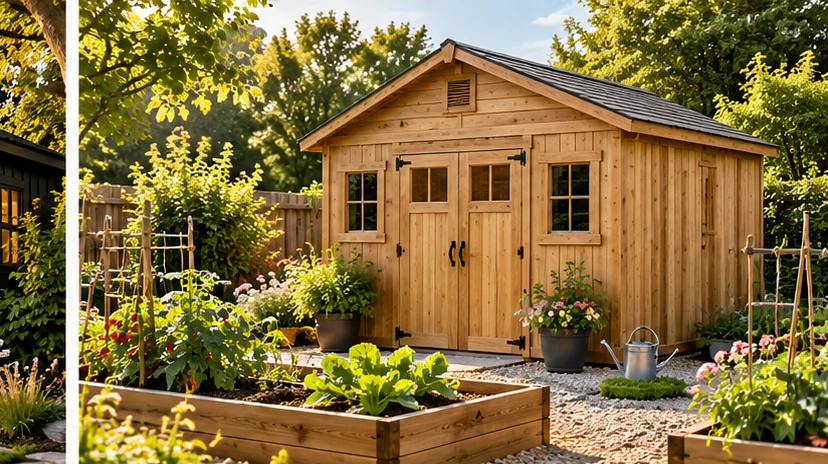
Long gear exposes a weakness in ordinary shed shopping: floor area alone does not tell you whether a kayak can turn through the entrance. Start with the complete gear envelope, not a shed size label.
Measure length and the handling angle
A long kayak may need to pass nearly straight through the opening. Check interior clear length and whether the door and approach allow the required angle.
Choose stable, suitable support
Follow the craft manufacturer’s storage recommendations. Use supports rated for the weight and shape, and avoid concentrated loads that deform the hull.
Consider wet equipment
Allow gear to dry and keep wet paddles, PFDs or soft goods from remaining against unventilated surfaces. A damp shed can damage both gear and stored cartons.
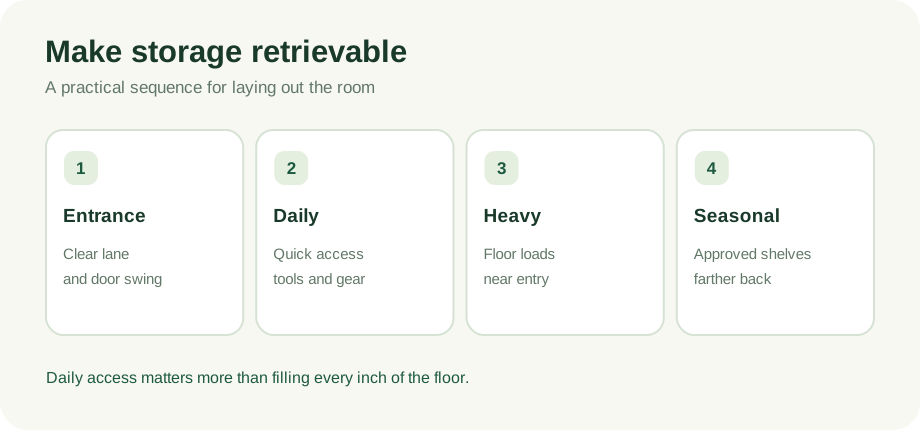
Plan the seasonal retrieval pattern
A rear rack is convenient for off-season storage but awkward for weekly paddling. Layout convenience should reflect actual use.
Length is not the only awkward dimension
A kayak may be long, wide at its center, and difficult to rotate while being carried. Measure the craft with attachments and imagine the angle required to pass through the doorway. The usable interior length is less than the shed's nominal exterior dimension. A plan with the kayak laid straight along the longest wall may still fail if the door is on the wrong side or other equipment blocks the approach.
Supports should protect the craft
Follow the kayak or paddleboard maker's guidance on hull orientation and support spacing. Make sure any rack or wall support is appropriately rated and attached to a suitable structure. Heavy gear hung from thin shed panels can damage both the wall and the craft. If the space is shared with sharp gardening tools, separate those zones to prevent accidental impacts.
Account for wet use
Water can enter a shed on boats, paddles, footwear and buoyancy aids. Choose practical ways to dry and store these items without blocking built-in ventilation. Keep soft goods clear of persistently damp walls. A frequently used boat should have an unobstructed route from storage to vehicle; moving a mower every time you launch quickly becomes frustrating.
Buyer / homeowner checklist
- Measure the longest item end-to-end
- Test an entry angle and turning area
- Verify rack support requirements
- Leave room for drying and accessory bins
Put it into practice: a planning example
A 12-foot craft is not guaranteed to fit inside a nominal 12-foot shed. First compare the actual clear internal dimension, then look at the doorway angle and whether you can rotate the craft without hitting the opposite wall. If rack support is approved, consider whether the craft maker recommends distributed support and how it will dry. Include paddles and PFDs in the plan. The best layout may be a longer structure with doors at the end, but that needs to be tested against the specific product.
Questions to bring to a seller or installer
A useful comparison begins with current written specifications for exact model numbers. Put all contenders in one worksheet and do not replace missing specifications with guesses. A good answer identifies the product, base, and included services, rather than offering a generic sales assurance.
- What are the exact dimensions of the largest item?
- How frequently will it be retrieved?
- Which supports and shelves are rated for the load?
- How will wet gear and access be handled?
For every answer, note the model number, the source of the specification, the date you obtained it, and whether it was confirmed in a current installation manual or supplier quote. This makes the comparison more useful if prices or terms change before you purchase.
Frequently asked questions
Will a 12-foot kayak fit in a 12-foot shed?
Not necessarily. Exterior nominal dimensions are not interior clear dimensions, and the doorway can limit entry.
Next step: compare complete specifications
Before committing, place at least two suitable models side by side. Note interior dimensions, actual doorway, floor construction, permitted foundation, anchoring, delivery terms, and warranty exclusions. Where specifications or prices are missing, contact the seller for the current written information. If work involves structural changes, power, or local approvals, consult the appropriate qualified professional.
We have not hands-on tested products or inspected customer installations for this article. Product specifications and applicable building rules must be checked with current manufacturers and local authorities. Retailer links elsewhere on this site are direct links until affiliate approvals are confirmed.
Read our editorial policy ↗