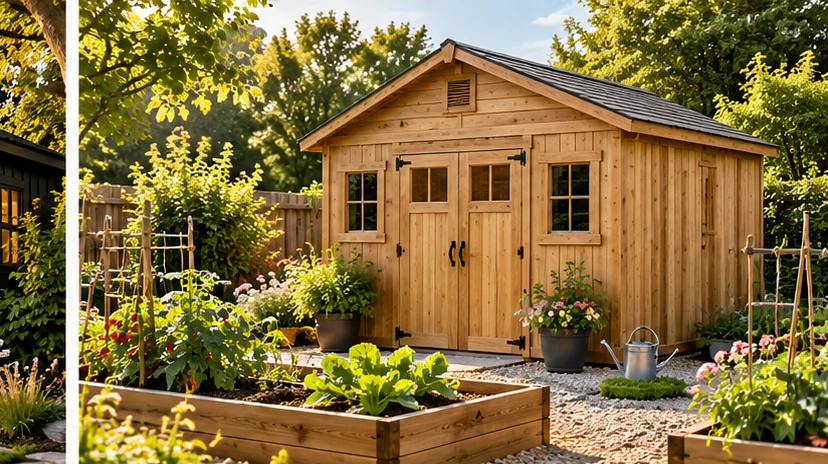
A gardening shed often works harder than a box-storage shed: tools arrive wet, soil spills, and small supplies need to remain visible. Designing around a few messy tasks makes the space much more useful.
Position the bench for movement
Give the potting surface enough light and leave a clear aisle for a watering can or bag of compost. Check the bench load rating before stacking heavy materials.
Give soil and wet gear their own area
Use washable containers and trays to make cleanup simple. Keep moisture away from electrical equipment and sensitive stored items.
Organize long-handled tools safely
Use appropriately secured racks that keep blades, tines and handles from falling into doorways. Confirm wall mounting is permitted for the shed construction.
Let air move and water leave
Follow the building’s ventilation guidance and site drainage plan. If a hose or sink is contemplated, consider appropriate plumbing and local approval requirements first.
Arrange for the mess you actually make
A potting bench should have a washable work surface and nearby space for compost, trays and hand tools. Set the bench where there is usable light but do not block doors or ventilation openings. Place damp bags where they cannot leak onto valuable tools or electrical equipment. If you work with water frequently, floor cleanup and drainage become more important than decorative shelving.
Organize by sequence of work
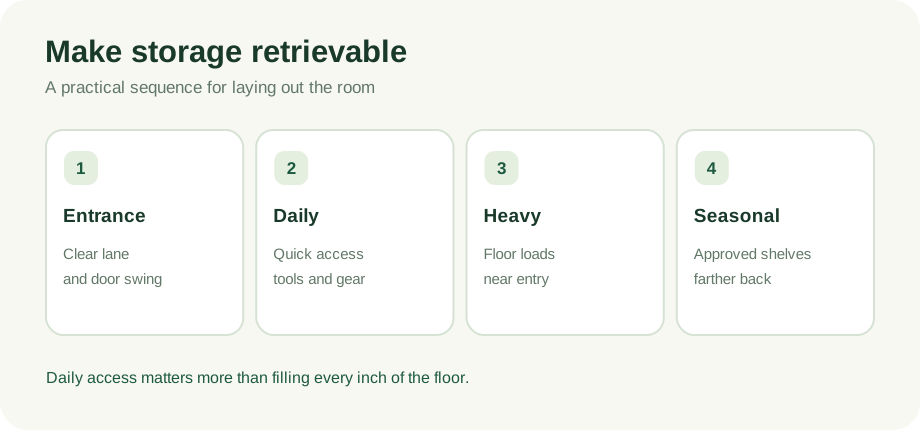
Keep pots and seed trays near the bench; put soil scoops, gloves and trowels on suitable hooks or in bins close enough to reach. Large rakes and forks belong in secure holders where sharp ends cannot fall into the aisle. Move rarely used seasonal items toward the back and avoid stacking them on unrated overhead supports. A simple wall label system can make a small shed feel far less crowded.
Plan for ventilation and safe materials
Check that any built-in vents remain clear, especially after adding a full-height shelving unit. Follow chemical and fertilizer label storage requirements rather than assuming every gardening product belongs in the shed. If permanent plumbing, power or occupied workshop uses are proposed, consult local requirements first. A straightforward storage-and-potting space may need far less infrastructure than a fully finished backyard studio.
Buyer / homeowner checklist
- Reserve a clear entry aisle
- Use wipe-clean surfaces and labeled bins
- Confirm wall and bench capacities
- Keep soil moisture from stored paper and textiles
Put it into practice: a planning example
Picture a small gardening shed after repotting several plants: wet bags on the floor, hand trowels missing, and the only table hidden behind seasonal bins. A more useful plan puts washable work surfaces near light, small hand tools within reach, and damp materials in a dedicated zone. Keep the access lane clear and confirm the bench and wall racks can carry intended loads. The goal is a place that can be cleaned in minutes, not a styled room that is hard to use.
Questions to bring to a seller or installer
A useful comparison begins with current written specifications for exact model numbers. Put all contenders in one worksheet and do not replace missing specifications with guesses. A good answer identifies the product, base, and included services, rather than offering a generic sales assurance.
- What are the exact dimensions of the largest item?
- How frequently will it be retrieved?
- Which supports and shelves are rated for the load?
- How will wet gear and access be handled?
For every answer, note the model number, the source of the specification, the date you obtained it, and whether it was confirmed in a current installation manual or supplier quote. This makes the comparison more useful if prices or terms change before you purchase.
Frequently asked questions
Is a resin shed good for gardening?
It can be, especially for easy-clean storage, as long as the door, interior space, and ventilation meet the intended use.
Next step: compare complete specifications
Before committing, place at least two suitable models side by side. Note interior dimensions, actual doorway, floor construction, permitted foundation, anchoring, delivery terms, and warranty exclusions. Where specifications or prices are missing, contact the seller for the current written information. If work involves structural changes, power, or local approvals, consult the appropriate qualified professional.
We have not hands-on tested products or inspected customer installations for this article. Product specifications and applicable building rules must be checked with current manufacturers and local authorities. Retailer links elsewhere on this site are direct links until affiliate approvals are confirmed.
Read our editorial policy ↗