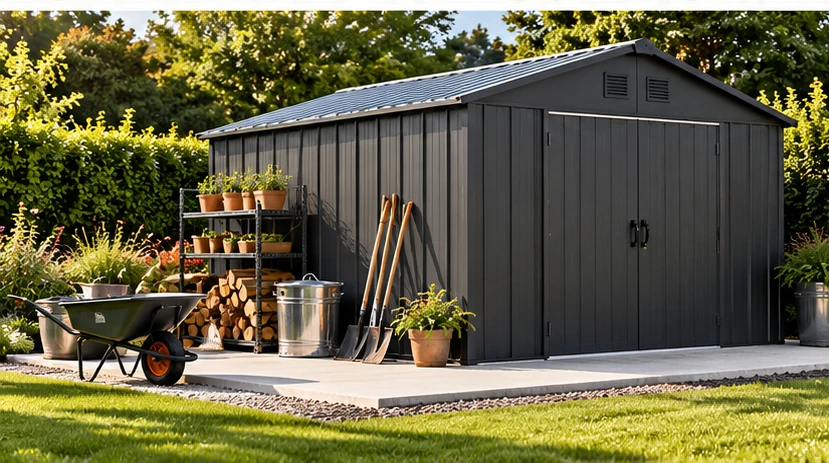
Illustrative editorial photography; not a photograph of any listed retailer product.
How to measure mower entry, ramp slope, floor load and equipment layout before buying. Check current product specifications, local building rules and real delivery costs before buying.
Measure the mower in working condition
For a riding mower, record its full width with discharge chute, overall length, height and turning needs. For a walk-behind mower, account for the handlebar position and whether you want to fold it each time. Don't buy solely from an online claim that a shed 'fits a mower'; your model may have a different footprint.
Compare those measurements to the clear opening of the shed's actual doors rather than the nominal panel width. Door thresholds, hinges, ramps and slopes all affect entry.
Think about ramps and floors
A mower can impose concentrated wheel loads and need a smooth transition into the shed. Confirm the floor's rated loading and whether the manufacturer approves a ramp. A steep or unstable ramp can be dangerous; when in doubt, use a professional design suited to the machine and the site.
The required foundation depends on the combined weight of the building and equipment, the ground and the manufacturer's instructions. Avoid assuming every small kit floor is built for vehicle loads.
Create a predictable retrieval path
Place the equipment you use weekly nearest the doors and reserve wall or overhead space for lighter items. Don't put tools where their handles will fall into the mower's path. If you plan on adding a snow blower or second machine later, consider whether an 8×10 or 10×12 layout provides safer circulation.
Sketch the layout with rectangles before buying. Mark a place for maintenance supplies and keep flammable liquids according to their specific storage requirements.
Verify the full model specification
Check the exterior footprint, usable internal space, door opening, floor load, roof rating for your climate, anchoring and any ventilation guidance. Ask about replacement door hardware or floor panels, which matter in a shed that sees frequent heavy use.
A slightly more expensive design with easy access can be a much better value than a larger-looking shed with awkward narrow doors.
Next steps before you order
- Measure the yard, the object you need to store, and the route through the doorway.
- Compare complete specifications for at least two models—not just exterior style.
- Get the full delivered-and-installed cost, including any foundation and anchoring.
- Check your local building department and any HOA before making irreversible changes.
Ready to narrow the options?
Use the no-sign-up size finder, then compare sellers directly. No retailer is represented as a paid partner before approval.