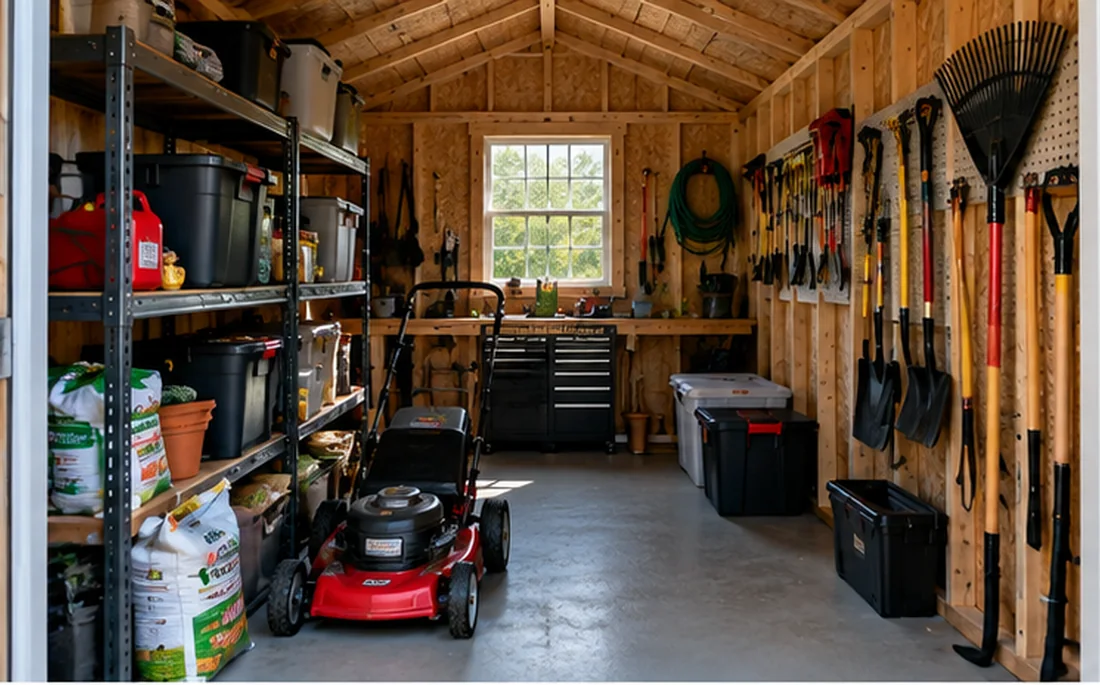
The fastest way to improve a shed is often not to buy new shelving. It is to stop making frequently used equipment cross in front of seasonal items. A five-zone layout gives each object a reason to be where it is.
Zone one: the clear access lane
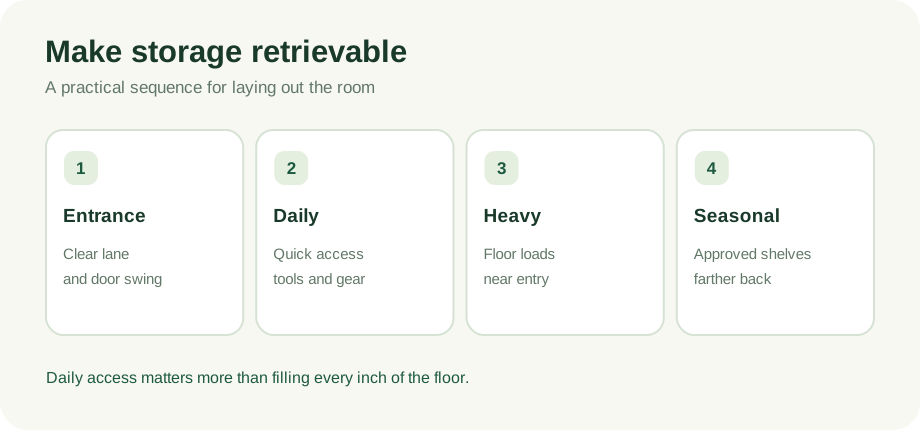
The entrance and route through the building are not extra storage. Keep enough space to roll your largest item out safely without lifting heavy objects over each other. Mark this lane on paper first, then design around it. A floor that looks empty in an online product image can feel crowded once a mower, hose reel and bins are added.
Zone two: daily-use tools
Hang rakes, brooms and small hand tools close to the door where they can be retrieved quickly. Use hooks or tool rails compatible with the wall system; lightweight resin or metal panels may not support ordinary wall-fastener assumptions. Consider a small washable tray for muddy items so water and soil do not spread across the floor.
Zone three: bulky floor equipment
Mowers, wheelbarrows and larger bins belong on the floor in positions that preserve the access path. Keep loads within the floor’s stated capacity and avoid balancing heavy equipment on high shelves. Leave enough space to inspect behind machinery for moisture or pests. Store any fuel and chemicals strictly according to their labeling and applicable safety guidance.
Zone four: seasonal overhead and rear storage
Holiday items, spare pots and infrequently used tools can go farther from the entrance. Use clearly labeled, closed containers where appropriate. Put the heaviest bins lower, and do not overload lofts, rafters or wall panels that are not rated as shelves. A small printed inventory can prevent buying duplicates you already own.
Zone five: a work or charging station—only if suitable
A workbench needs a stable foundation, safe clearances, lighting and ventilation appropriate to the activity. Any added electrical supply should be installed under local rules by qualified personnel. If the shed is unpowered or intended only for storage, skip the workstation and use the space for more accessible organization instead.
A 30-minute reorganization exercise
Take the largest object out of the shed and mark its parking position. Clear a path from that position to the doors, then group everything else by how often it is used. Put the daily group closest, seasonal goods farther away, and oversized objects low. Before mounting anything, verify the shed wall and floor load specifications. Photograph the result and make a small label map so the arrangement survives the next busy season.
If the floor is still crowded, ask whether the problem is truly lack of volume or simply inaccessible storage. Adding an unrated overhead shelf is not a safe solution to either problem.
Buyer / homeowner checklist
- Reserve an access lane before placing any shelves.
- Keep frequently used objects near the opening.
- Check each wall and shelf load rating.
- Store heavy items low and away from door swing.
- Leave inspection gaps for leaks and pests.
Questions to bring to a seller or installer
A useful comparison begins with current written specifications for exact model numbers. Put all contenders in one worksheet and do not replace missing specifications with guesses. A good answer identifies the product, base, and included services, rather than offering a generic sales assurance.
- What is included in the base product?
- Which delivery and installation services are excluded?
- What documentation supports the claims?
- What is the full project cost and ongoing responsibility?
For every answer, note the model number, the source of the specification, the date you obtained it, and whether it was confirmed in a current installation manual or supplier quote. This makes the comparison more useful if prices or terms change before you purchase.
Frequently asked questions
What goes on high shelves?
Light, infrequently used items, within the approved load capacity. Avoid heavy bins or materials that could fall.
Are adhesive hooks enough for large garden tools?
Not necessarily. Evaluate the weight and wall material, and use manufacturer-approved supports.
Next step: compare complete specifications
Before committing, place at least two suitable models side by side. Note interior dimensions, actual doorway, floor construction, permitted foundation, anchoring, delivery terms, and warranty exclusions. Where specifications or prices are missing, contact the seller for the current written information. If work involves structural changes, power, or local approvals, consult the appropriate qualified professional.
We have not hands-on tested products or inspected customer installations for this article. Product specifications and applicable building rules must be checked with current manufacturers and local authorities. Retailer links elsewhere on this site are direct links until affiliate approvals are confirmed.
Read our editorial policy ↗